- TOP
- For Doctor
- Electronic Medical Record: Doctor’s Report
- Kaneda Internal Medicine Clinic

Kaneda Internal Medicine Clinic
Interviewee: Dr. Ishi KanedaKurashiki City, Okayama Prefecture / Internal medicine (prevention of complications of lifestyle-related diseases, diabetes, endocrine disorders, etc.)

Rapid data analysis that dramatically improves medical quality and business analysis.
Kaneda Internal Medicine Clinic opened in 2021 and provides general internal medicine services, including diabetes, endocrinology, and lifestyle-related diseases. Since its opening, the clinic has been using the electronic medical record system “BrainBox V-Ⅲ” and is planning to upgrade to “BrainBox V-Ⅳ” in the future.
We spoke with Director Ishiji Kaneda about the background behind the introduction of BrainBox, the reasons for choosing YUYAMA products, and the features that have contributed to improved operational efficiency and the quality of medical care.
Case Study Highlights
Point 1: [Reasons for Selection] Recommendations from senior physicians, data analysis to support business decisions, easy access to drug information, and quotation functionality were attractive features.
1. An “Overwhelming recommendation” from a trusted senior physician.
2. Fast and easy data search and analysis functions that can also be used for business decision-making.
3. Easy access to detailed drug information, provides patients with peace of mind.
4. Quotation functionsality for daily consultations and examinations.
POINT 2: [Post-Implementation Use and Benefits] Operational efficiency and the quality of care have improved through data analysis, linkage with prescription systems, and the use of touch panel monitors.
1. Rapid searching forof disease names and data by patient demographic and treatment status.
2. The prescription check function reduces the workload of administrative staff and minimizes errors.
3. Touch panel monitors that allow for clear and easy-to-understand explanations to patients.
4. Quick access to required documents.
POINT 3: [What’s Great About YUYAMA!] Excellent instructor support enabled smooth operations from the early stages of the clinic’s opening.
Thanks to clear and easy-to-understand support, all staff members were able to smoothly master system operations during preparations for the clinic’s opening.
First, could you please tell us about the overview and characteristics of Kaneda Internal Medicine Clinic?
Our clinic opened in October 2021 as a specialized clinic for diabetes and endocrine diseases. In addition to myself, we have a total of nine staff members: three nurses, one registered dietitian, two clinical laboratory technicians, and two reception staff. We provide medical care in diabetes and endocrinology, as well as general internal medicine, including lifestyle-related diseases.
The overwhelming majority of our patients have diabetes, followed by those with endocrine diseases such as thyroid disorders and lifestyle-related conditions. Many patients with gestational diabetes are referred to our clinic, and most patients are in their 30s to 50s. After their initial visit, more than 80% of patients continue to visit our clinic regularly for long-term follow-up.
Is there anything you particularly focus on or keep in mind during your regular consultations?
First of all, we aim to provide the same level of outpatient care as a hospital, even within a limited space. Our clinic is located in a medical mall, where space is inevitably limited. In large hospitals, patients often spend an entire day moving between departments to receive specialized medical care, which can be time-consuming. At our clinic, we strive to deliver the same level of specialized care in a more compact setting and to complete it as efficiently as possible. From consultations and examinations to explaining test results and, in some cases, providing nutritional guidance, I make a conscious effort to explain things clearly and in an easy-to-understand manner, even if consultation times or waiting times become slightly longer.
Another important focus is our ability to collaborate appropriately with other medical institutions, taking into account each patient’s complications and background. After consultations at our clinic, we make arrangements so that patients can be referred, in a one-stop manner, to physicians who are best suited to their individual conditions. When referrals to other institutions are necessary, we share all relevant information and data so that the receiving physician can quickly understand the purpose of the referral. This approach represents our own network of individualized collaboration, tailored to specific diseases and complications.
Upon opening your clinic, you introduced our electronic medical record system, BrainBox V-Ⅲ, designed for clinics without inpatient beds. Could you please tell us what led to its adoption?
When I was working as a staff physician, I used a hospital-oriented electronic medical record system from a major manufacturer. When preparing to open my own clinic, I prioritized our clinical style and functionality unique to outpatient care, which ultimately led me to choose YUYAMA’s electronic medical record system.
While researching various options during the preparation period, I felt that YUYAMA’s system had positioned itself on equal footing with other electronic medical record systems for clinics, including those from major vendors, as a solution specifically designed for outpatient clinics.
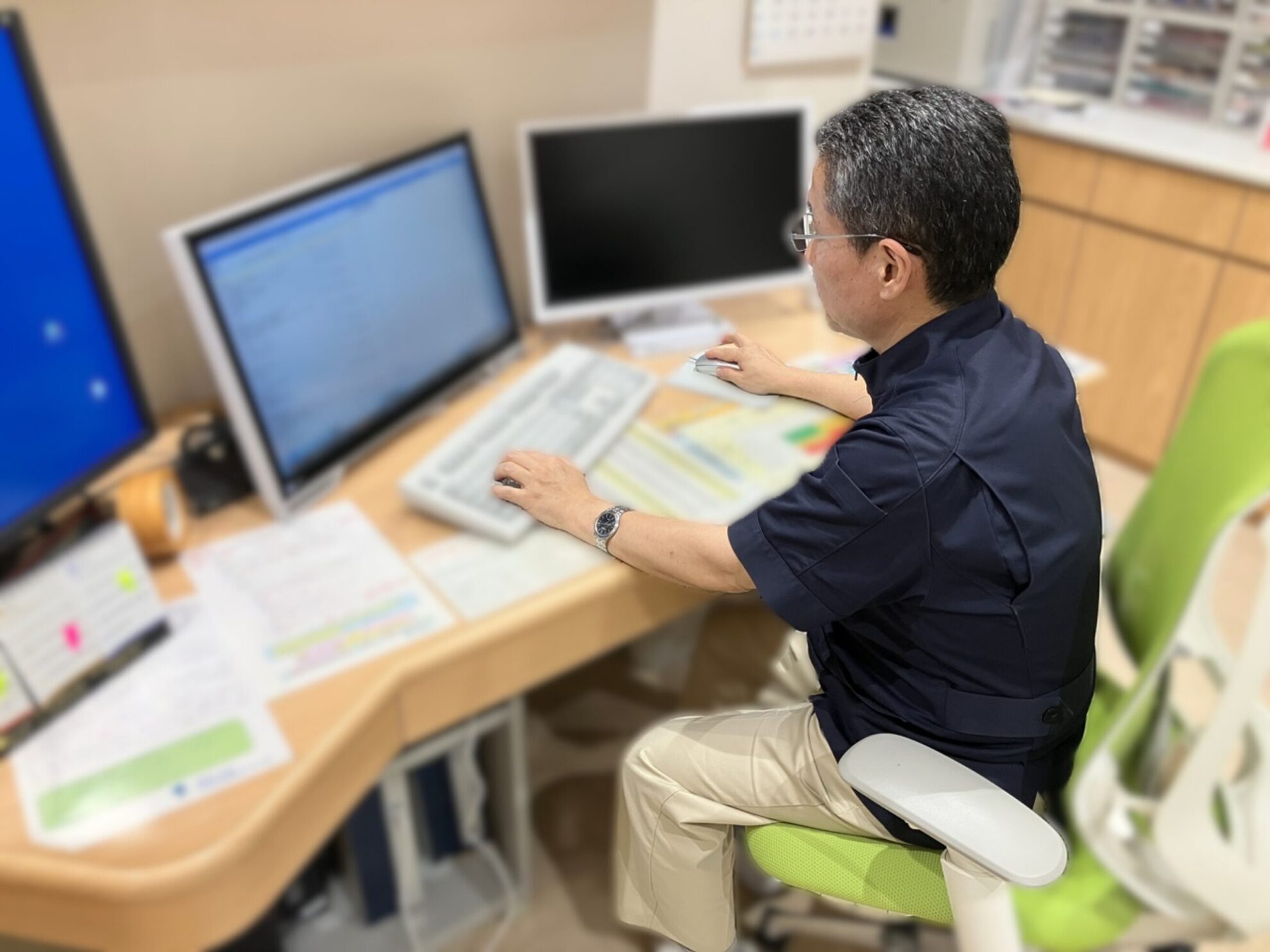
Director Dr. Kaneda.
Out of the many electronic medical record systems available for clinics, what made you choose YUYAMA?
The main reason was an “overwhelming recommendation” from a senior physician I trust. I consulted him when opening my clinic, and as he himself uses YUYAMA’s electronic medical record system, he shared its strengths and key features with me. Of course, I did not base my decision solely on his recommendation; I also carefully considered the available functions and overall benefits before making my choice.
The biggest deciding factor was that YUYAMA’s electronic medical record system offers data analysis functions that are useful not only for daily clinical practice but also for understanding and managing the clinic’s overall business performance.
You mentioned that the data analysis function was the deciding factor. How are you using it in practice?
I appreciate being able to easily and quickly search and analyze data—including patient diagnoses, age groups, and costs—and use this information to support management decisions. When I was working as a hospital physician, even if I wanted this kind of data, I had to ask the medical affairs department or other relevant sections to analyze it, which took considerable time. Now, I can review the data with just a few clicks after finishing my daily work. Being able to check this information without spending extra time, effort, or manpower is extremely helpful.
A senior physician who strongly recommends YUYAMA has also commented that it is very useful to be able to immediately check all the necessary data related to medication usage, such as data by disease or age group, how many patients are using a particular medication and for how long, and how many patients are using Drug A, Drug B, or Drug C.
In my own daily practice, I regularly review data such as the number of first-time patients per day, monthly patient volumes and medical fees displayed in graphs, and comparisons showing whether figures have increased or decreased compared to the previous month. One major advantage is how easily I can obtain data such as “how many patients underwent ultrasound examinations during a given month” or “how many patients are receiving insulin therapy.”
What other benefits have you noticed in your medical practice?
Data such as package inserts for pharmaceuticals is very easy to read. When explaining information that patients need to know, such as effects and side effects, we explain together on the monitor. This puts patients at ease, rather than having to read a book. We also make use of touchscreen monitors, so sometimes we explain by writing directly on the screen.
Another great feature is the “quote function,” which allows you to enter all the necessary test items and then provide a rough estimate of costs, including management fees. When performing multiple tests, it’s now easier to communicate to patients how much a day’s costs will be.
We’ve also had the system linked to another company’s filing system, which we introduced after being recommended by many parties, and so far it’s worked without any issues, which has been very helpful.
What benefits have you noticed in terms of improved operational efficiency and the quality of medical care?
The first benefit is the ability to quickly search for disease names and analyze the database of patients visiting our clinic, as mentioned earlier.
The second benefit is the linkage with medical receipts. For example, if a prescribed medication does not correspond to the registered disease name, an alert is displayed. In addition, if a test order does not match a registered disease name, it is highlighted in red, indicating that the disease name has not yet been registered. This linkage with medical receipts is particularly helpful for administrative staff.
The third benefit is the ease of sharing information with patients using a touch panel monitor, such as pointing out “a lump here” or “a shadow here.” We explain findings by drawing directly on diagrams or by combining X-ray images with illustrations.
The fourth benefit is a function that allows various document files to be managed as groups, enabling quick access to the required documents. The ability to quickly retrieve documents and information that would otherwise be scattered is a feature unique to electronic medical record systems designed for outpatient care.
In addition, while we rely on YUYAMA’s support for more complex settings, I can handle simpler configurations myself. It is also helpful that there are multiple ways to retrieve the same documents and data.
How do you evaluate YUYAMA’s support system?
The instructor assigned to our clinic was excellent. The guidance was very clear and well-structured, which allowed us to learn the system extremely efficiently. At the time of opening, I do not recall any issues occurring during standard clinical workflows.
Our administrative staff also became proficient in using the accounting functions, and we rarely needed to make inquiries. From the very start of our clinic’s operation, we were able to use the system without major difficulties, and both physicians and staff have been able to use it smoothly.
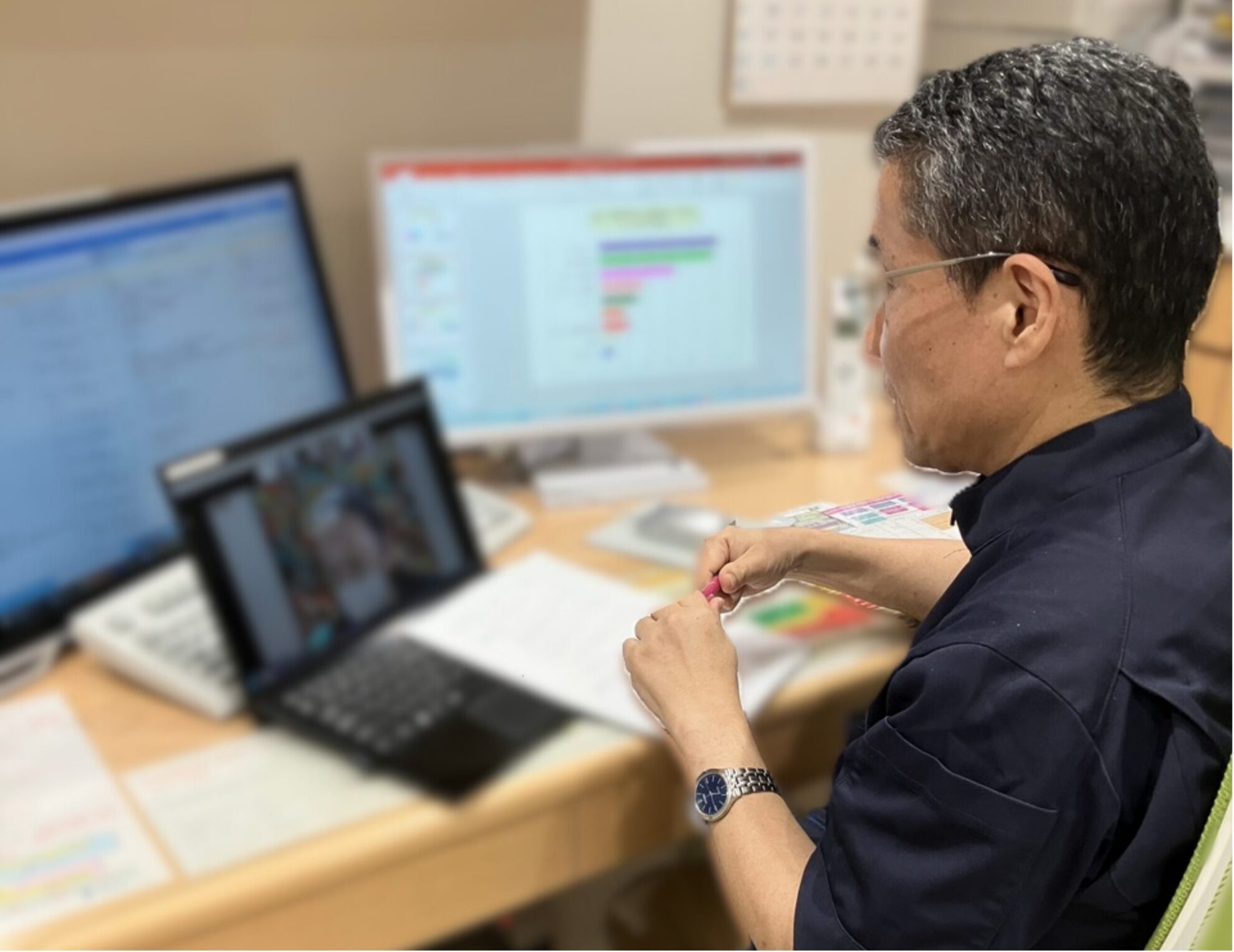
You are planning to update to BrainBox V-Ⅳ soon. What features are you looking forward to?
I am particularly looking forward to the “Next Visit Record” function included in BrainBox V-Ⅳ, as it is expected to significantly reduce the time required for consultation preparation. For clinics like ours that primarily operate on an appointment-based system, it is possible to roughly predict the number of patients for the following day. This makes it feasible to prepare the basic framework of patient records in advance—such as planning which examinations will be performed for each patient or preparing documents needed for explanations—in order to reduce the workload for the next day.
I believe this function was introduced in response to strong demand from physicians who provide appointment-based care for chronic diseases. It is an extremely helpful feature, and for a clinic with our style of practice, it is essentially indispensable. I had the opportunity to experience this function on a demo unit, and I am confident that it will help reduce the overall workload.
Is there anything else you would like to see from YUYAMA in the future?
I believe the system would become even more convenient with the addition of a “vertical electronic medical record” and a medical record summary function.
For patients with chronic conditions and long medical histories, important information can be pushed toward the bottom of the screen when using a horizontal layout. During busy consultations, physicians often glance first at the top of the screen, which creates a risk of overlooking critical information. As a solution to this issue, having a vertical electronic medical record layout and a medical record summary function would be extremely helpful.
Finally, could you share a message for doctors at clinics who are considering introducing an electronic medical record system?
Data such as patient age groups, medication usage, and the number of first-time patients seen in a year are extremely important for clinic management. Recently, a physician who is planning to open a clinic in the same specialty in another region visited our clinic. During the visit, I explained the strengths of these functions and shared my view: “If there is an electronic medical record system that fits your style of practice, that is the best choice. However, if your clinic is in the same field as ours, YUYAMA’s functions offer clear advantages.” Later, I learned that they also decided to introduce a YUYAMA product.
Of course, the required features vary greatly depending on the specialty, and they also differ according to the style of medical care each physician wishes to provide. However, I believe it is important to consider how well the electronic medical record system matches the specialty, as well as how flexibly it can be customized within the system.
Thank you very much for your time today.
The functionality required of an electronic medical record system varies depending on the medical specialty and the size of the clinic. As in the case of Kaneda Internal Medicine Clinic, it is important to select an electronic medical record system that matches your clinic’s style of practice by listening to real feedback from acquaintances and fellow physicians, as well as by evaluating the system through trials and demonstrations. In addition, when introducing an electronic medical record system at the time of opening a clinic, it is necessary to provide advance training for all medical professionals and administrative staff. Other important factors to consider include whether pre-implementation instruction by an instructor is available, the level of post-implementation support, and the speed of response in the event of trouble.
Clinic Profile
Kaneda Internal Medicine Clinic
Address: All Pharmacy Town 2F, 3-13-1 Achi, Kurashiki City, Okayama Prefecture
Information current as of December 2025.